

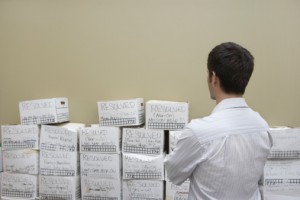
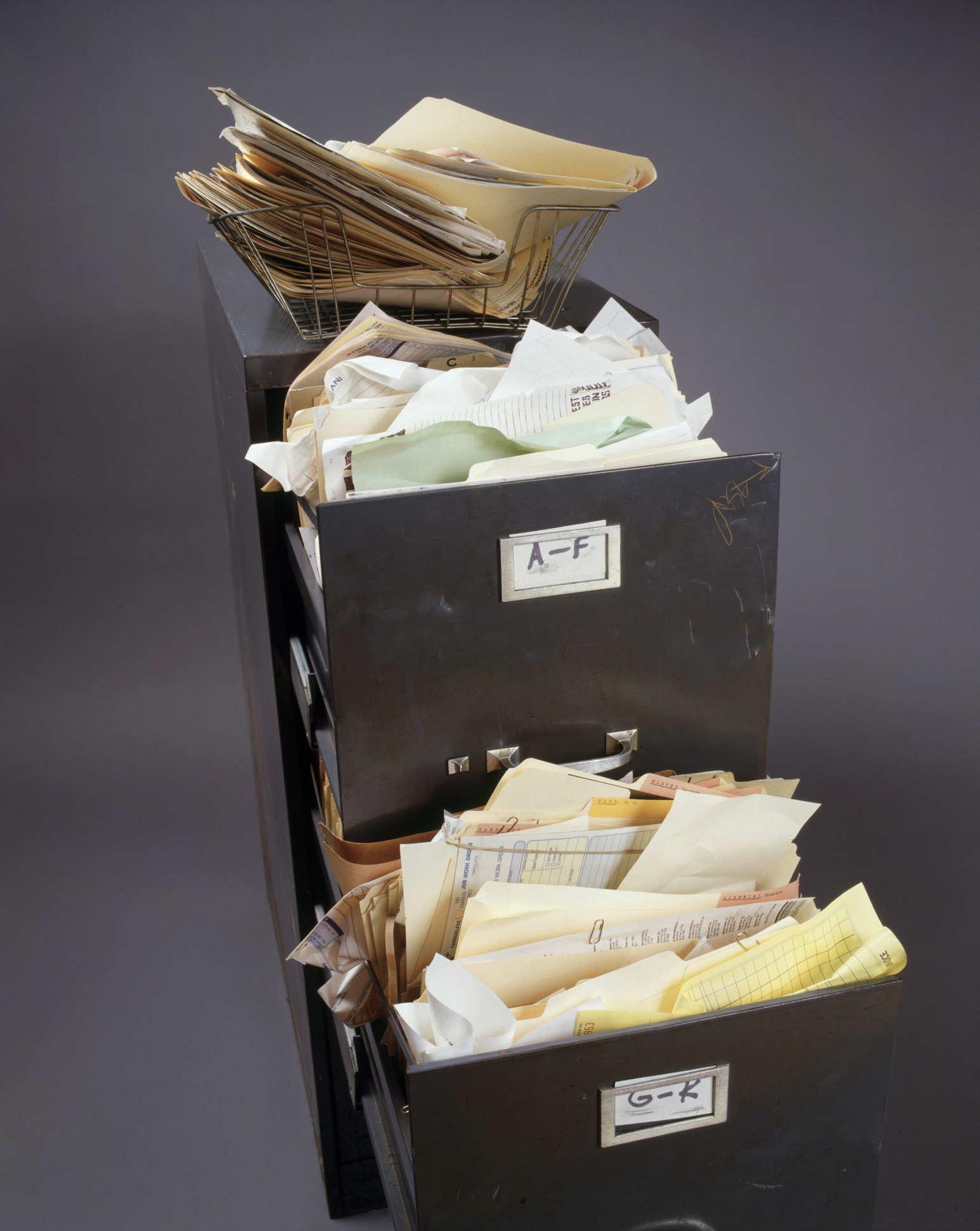
Don’t be like this guy…turn your filing system into a finding system. Does your filing system allow you to find what you need, when you need it? It is estimated that people waste 150 hours per year just looking for lost items. Just think about the cost of 150 hours of wasted time per person. An unorganized office can cost you hundreds of dollars every year due to lost time, lack of efficiency, and even duplicated efforts in recreating work you can’t find; or late fees because you’ve lost an invoice and missed the due date.
Of course, everyone knows it’s important to spend your time wisely. Who can afford to spend valuable time searching paper-by-paper, or drawer-by-drawer trying to find a document? Searching for papers that are filed somewhere can be time consuming, if they are filed at all. At worst, this could cause you to miss a deadline; at the least, you’ll spend valuable time searching that could be better spent on more productive tasks.
An organized office is so important for you and your business, and implementing a simple, effective document management and filing system can help. You need to know exactly where to find what you’re looking for, when you need it.
Once you realize the importance of an effective system for managing your office documents, it’s time to turn your filing system into a ‘finding system”.
Of course, you can always use an alphabetical filing system, which is what most companies resort to by default, simply because it’s all they know. After over 100 years, the alphabetic methods are firmly entrenched into our way of doing business. However, the alphabetic filing system method has many flaws and starts to breakdown almost as soon as it is implemented. The alphabetic method requires that a person (or worse, a group of people) in the office remember how they filed the information. The problem is that people forget or they don’t all think alike. Many times, the person who sets up the filing system leaves the company and the knowledge of where things are filed goes out the door with them. (this is a BIG PROBLEM!)
The solution seems elusive. Yet, there is a simple filing system that can be easily implemented in any size home or office. Converting your traditional files to this more efficient system will make you wonder how you ever managed without it.
Paper Tiger filing system software is a program that allows you to easily categorize and organize your files based on a numerical indexing system that makes it a cinch to find what you need by allowing you to search for any keyword you choose—right from your computer! Think of it as the Google search engine for your file cabinet.
For those who need to keep the paper copies and originals, this is the ideal solution to document management. You simply input item name and keywords to index your paper files into Paper Tiger’s database, and file them into your hanging file folders the same way you’ve always done. With Paper Tiger, you really can turn your filing system into a finding system.
Not sure you want to commit to managing your office documents via computer? You can enjoy a free version, learn how the system works and see if this innovative filing system will work for you before you buy. If you find—as tens of thousands of others including large businesses, major universities, government agencies, non-profits, small businesses, professionals and home users have—that this is indeed something you can’t live without, you can upgrade to purchase the full product and get started on managing your files more efficiently right away.
You can find training and pre-recorded webinars with tips and all the information you need to help you create a manageable, effective filing system. You can learn how to use Paper Tiger software in under 30 minutes – and you will never have to remember how you filed a document again!
Since you can print out an index of your files (File List Report), you don’t have to worry about losing everything if your computer crashes or the Internet is down for some reason. With Paper Tiger, you’ll have the ease of computer filing system solution and the security of a paper trail as well. You’ll be able to search for documents and files based on keywords that you choose to input, while creating a custom designed filing solution that’s perfect for your office. It’s the best of both worlds. There is security in having the real paper, when you need it.
An efficient filing system is a must for any size company from the smallest home-based business to the largest corporation, school, or government agency.
The ability to search for files and documents using keywords you choose to input will save time and money every day, while greatly reducing stress and increasing productivity.
The business world today is much too competitive to not be as efficient as possible. The days of using traditional alphabetic filing systems with their inherent disadvantages can be quickly overcome. Indexing is a great, low-cost, low-hassle, reduced risk way to meet your organization’s document management needs.
Try Paper Tiger filing system software today and turn your filing system into a finding system.

During this webinar, Anne discussed the basic concept of Paper Tiger to organize both paper files and other physical items of which you need to keep track so that you can find them when you need them, and the concept of Digital Tiger, powered by Google Docs to organize and find your digital files. She demonstrated how to use Digital Tiger more effectively for digital filing, in addition to the following to show how to use Paper Tiger with Digital Tiger, so you can get organized and be more productive.
Find Anything In Your Office In 5 Seconds or Less…Guaranteed! Watch the webinar to learn more.
As information, Anne is a professional speaker, productivity expert, professional organizer and author. If you want to learn more about Anne and her services, please visit her website at www.StrategizeAndOrganize.com.
She may be in Colorado (and sometimes in Arizona!), but she’s nationally recognized as an expert and works with people throughout the US in person and virtually.
You can contact Anne at amcgurty@strategizeandorganize.com or by phone at 303 881-0174.
See more information here on Paper Tiger Filing System Software for Document Management
Q: What type of scanner does Anne recommend?
A: Fujitsu ScanSnap 1500 and we have more information in our knowledge base which you might find helpful at http://www.thepapertiger.com/support/articles.php?id=20240901&catId=20008411
Q: Is it difficult to add more items to an existing location after it is set up? For example, if I have 20 items in action location, then I need there to be 30, is this difficult to change?
A: No, not difficult at all. You would simply click the Locations box, then click to edit the Location that you need to increase the capacity, and you’ll be able to input 30 in the capacity box and save.
Q: I am a faculty member at a university and have many files that I use for multiple purposes or classes etc. I may have a file that I use for 2 different courses and 2 different writing or research projects. Any suggestions?
Q: Would I or could I keep the folder tab labels as is, in addition to the Paper Tiger labels? For example, my cell phone folder is currently “AT&T cell” – and so I would add whatever label Paper Tiger assigns – such as “Reference 1″?
A: You can keep both labels if you like on each hanging file folder, but yes you would need to match the label that Paper Tiger assigns when you index the file in Paper Tiger’s database. In your example, you would have 2 tab labels on your hanging file folder. One tab would be entitled AT&T cell and the second tab would be Reference 1.
Q: I have a couple of file drawers that “work” – that I want to keep more or less as is. I suppose I would call them reference files – they are mainly files that I file paid bills from our vendors, or keep correspondence from my office landlord, or to access (paper) forms/worksheets that we need every so often. Would I start by clearing this file drawer out, then enter them into Paper Tiger and file them back into the same drawer? Also, as I pay each bill, say my cell phone bill, I don’t want to have to enter that into the system or look anything up on the computer – I just want to file it. Can I do it that way or do I need to enter each bill as I pay it? (Am I over-thinking this?)
A: I think you are over-thinking this. Yes, you can index each file folder that you currently have in your file drawers. Depending on the location of your file drawers, will depend on if you need to take them out to index them. Base that decision on convenience more than anything. For example, if you’re indexing file drawers in your desk, you can just take it 1 folder at a time indexing as you go. For your cell phone bill, simply file it in the hanging file folder that you already have set up for your cell phone bills, and there wouldn’t be any reason to add anything to Paper Tiger at that point for the new bill you’re putting in file, unless you want to add a note about a specific month.
Q: Is there any recommendation for how often we should stop to print file tabs and create new file folders, i.e., as you need them or at the end of the day, etc.?
A: It is recommended that you print file tabs for each Location for as many as you want to have ready to be filed into. For example, you might print file tabs for 50 to begin with, go ahead and insert the file tabs in the plastic file inserts and affix onto the hanging file folders. You now have 50 ready to file into. When you have filed into 40, increase the capacity of this Location to 75 or 100, then print file tabs for 51-75 or 51-100. This way, you won’t have to keep printing and inserting tabs everyday.
Q: Is it recommended that the Paper Tiger filing system can be used for “organizing tasks” that aren’t paper-based and don’t require paper to be put into folders…just organizing “actions”?
A: Yes, you can do organize anything that you can put a number onto or just make notes in the database, which will allow you to search for the “action” later. We have used Paper Tiger for ideas, so it would work just as well for organizing tasks or actions.
Q: I love Paper Tiger, but find some of the moves are non-intuitive such as the use of confirmation to get rid of trash or to transfer.
A: You can choose to require a confirmation when using the Transfer function, or you can say No that you do not want to require confirmation. You would check the radio button to require confirmation while transferring the item.
Requiring confirmation will allow you to print out a Transfer Report prior to Confirming so that you can verify the location the item will be moved to or have your assistant physically move the item(s) by checking off the report, then check Confirm in Paper Tiger to affirm the job has been completed.
Q: Did you have to physically move the folder?
A: Yes, when you transfer an item from one Location to another in Paper Tiger’s database, you will need to move the physical item (the paper files or other physical item), to match the item number in Paper Tiger where it has been moved to in the database. So you take papers out of the hanging file folder and leave folder behind and it becomes open. Keep file folder in place. Otherwise what you’re organizing by indexing into Paper Tiger will be compromised, and when you search in Paper Tiger, the item will not be in the correct location.
Q: What if you don’t use hanging files, such as manilla file folders?
A: You would simply use the same concept of applying the labels to your manilla folders instead of the hanging file folder plastic tabs.
Q: What happens when you complete activity and want to move to another location
A: You would conduct a Transfer, Move function. See our knowledge base article at http://thepapertiger.com/support/articles.php?id=141137&catId=230
Q: Do you have anyone on your staff or are you aware of any clients who have successfully interfaced and implemented the concepts introduced in David Allen’s book entitled, GETTING THINGS DONE- The Art of Stress-Free Productivity? He puts forth a system for utilizing files and places to put things, etc.
A: Anne conducts a demonstration in this webinar, but we also have another demonstration by Michelle Panzlaff at Using Paper Tiger as a Getting Things Done (GTD) Task List Manager
Other comment: When I first started using Paper Tiger about ten years ago, I made too many locations and different files. In effect, I made more work for myself. It took awhile to simplify. I am now down to three or four.

Whether you’re organizing your desk drawers, filing cabinets, a stack of paper files, a closet, attic, or the garage, Paper Tiger Filing System software will help you get organized. You can have a system in place so you can maintain organization, and be able to live and work in a more productive environment.

You may be asking yourself, why do I want to add another ‘system’ to my chaos. Will this really help me get organized? Think about it this way. You are already wasting a lot of time searching for things, whether it be in your filing cabinet under a name you don’t remember what you filed it under, or maybe what you’re looking for is something that you’ve boxed up in the attic, but you don’t know which box?
You also may dread the thought of having to make decisions about what to throw away or what to keep. Remember the Pareto Principle, you know the 80/20 rule … we only use 20% of what we have, and the other 80% are back-ups, mistakes, things we hold on to because we don’t make good decisions about what to do with them. If you don’t try to figure out a system that will get you organized so you can find what you need when you need it, you may find that you’re only using 20% of what you can find!
Paper Tiger uses the power of the computer to organize documents stored in your file cabinets and enables users to actually find what they need, when they need it without time wasting searches. Instead of filing paper documents alphabetically, users file documents numerically. Instead of one “magic” word that you have to decide what to file a document under, you can assign as many keywords as you like!
Paper Tiger combined with a proven methodology, enables users to get organized and manage paper and other physical items more effectively.
Think of your file cabinet as a “paper warehouse” and the hanging files in your file cabinet as containers in the warehouse. When you want to file something, you simply find an empty container (file folder), or an existing container with other papers on the same subject, put the paper in it, type in a few keywords relating to the document being filed, and you’re done! It is that simple!
With Paper Tiger, a location is a “group of like items” such as “Action” and “Reference” – which are the first two locations we recommend that you set up when using Paper Tiger. For this reason, we have pre-printed tabs that can be ordered with Paper Tiger software. The pre-printed tabs are Action 1-60 and Reference 1-320 to get you started. In addition, there are several text labels for a Desktop File. Desktop Files are not a required component of Paper Tiger. They were developed as a way of customizing Paper Tiger for individual preferences. For many Paper Tiger users, that is all the labels they ever need.
How many locations should you have? With Paper Tiger there are no “shoulds!” As long as you put in a few keywords for each file, you will be able to find anything you need. However, the more locations you create, the more complicated you make the system and the longer it will take. So start simple! You can easily refine the system later on and you will probably discover it’s unnecessary work.
To explain, a four drawer file cabinet can be one location (Reference) or four locations (Clients, Financial, Administrative, Research). The natural inclination of most people is to make it four locations. The least labor-intensive system, however, would be to make the file cabinet one Location called “Reference”.
Start with two locations: Action and Reference. You can use the “Category” field to indicate whether the file contains client, financial, administration, or research info. Now you might be thinking: “Horror of horrors! All my files will be “mixed up.” Yes, they will be – but so what?
Think of doing a Google search for information. As long as the information shows up, do you care where it is? Think of Paper Tiger the same way.
Paper Tiger Action Files
If you have a paper file that requires action by you, it becomes an Action File. These are the types of files that you might be working on as a project that you want to keep close, maybe in your desk drawer. These are ‘temporary action’ files. When a project is complete, you can transfer this file to your Reference Location or toss if you don’t need to keep the documents for this project.
Organizing experts have worked one on one with hundreds of individuals, and have discovered that most people had single pieces of paper which required their action that they weren’t sure what to do with. When asked the question, “What is the next action you need to take on this piece of paper?” the most common answers were those that became “Desktop Files” such as “Call,” “Data Entry,” “Expense Reimbursement” or “Waiting on Response.” These are what we call ‘permanent action’ files because they are regular, repeating, frequent, and general, so not a project type action that will need a file folder of its own. Since these papers often move quickly and usually not needed after the action has completed, it is not recommended that you index them in Paper Tiger. For example:
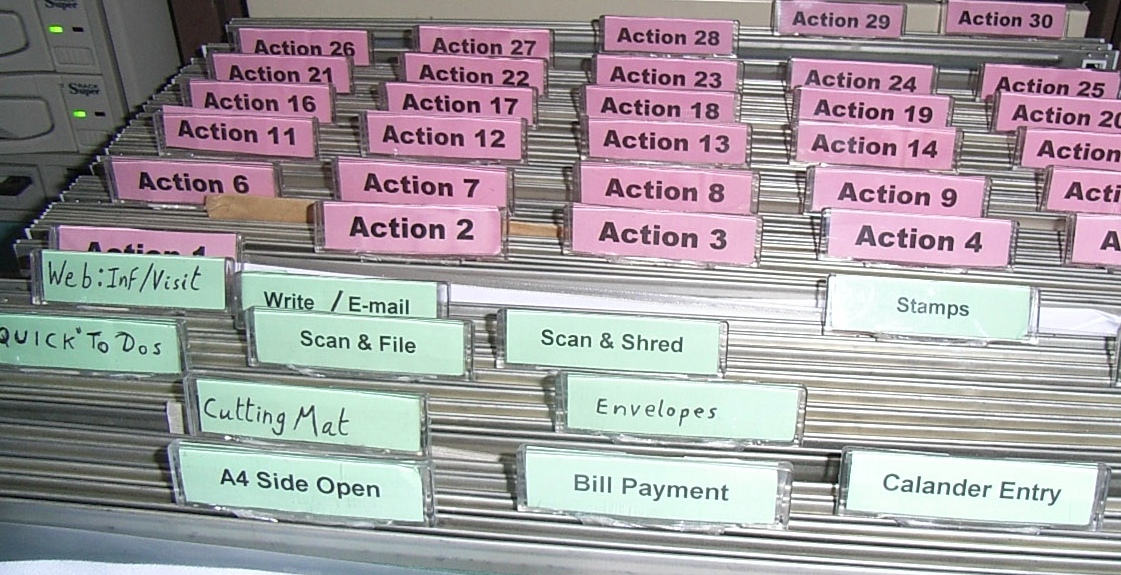
Paper Tiger Reference Files
If you don’t know whether you need a paper file, but you just don’t want to throw it away, or you want it for future reference, it should become a Reference File.
For a four-drawer file cabinet in your office called “Reference”, the outside of the drawers might be labeled as follows:
Drawer 1: Reference 1-55
Drawer 2: Reference 56-95
Drawer 3: Reference 96-140
Drawer 4: Reference 141-195
Each Reference number represents an item that you’ve indexed into Paper Tiger with item name and keywords…maybe a category, notes, and an action date.
If you just cannot bear to have certain files mixed in with all the other Reference files, then create a Location for that type of file. For example, some people want to be sure that they have all their client files together. In this case, create a Location named “Clients”, then the item names might be the client or company name, and keywords could be their account number with you, their address, phone number and any other information in which you might search for them later or of which you want to keep track, such as the last time you spoke to them.
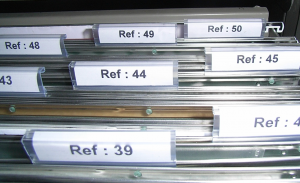
The next Location you will want to create is Archives. This Location is for those documents that you don’t need in your Reference Location, but need to keep for financial or legal reasons for a specific length of time. You can also use the Archives Location for when documents can be tossed, but you’re not willing to get rid of them just yet. You will want to create this “Archives” Location in Paper Tiger and decide the physical location to where you’ll move those files. This will be in a less accessible location, so you will want to give it a new Location. Your Archives location could be located in a storage room, garage, attic, or at a records retention storage company.
You might also think about when each item can be removed (tossed/shredded) and set an Action Date to that item when you transfer them to your Archive Location in Paper Tiger and physically. That way you will know when each file can be removed without going through the file. Creating a records retention policy for your home and/or office will help you to have a guideline of how long you should keep records in your specific situation so you don’t have to rethink this every time you clean out your files. We have articles under our blog category, “Retention Guidelines: How long should you keep records?” that you might find helpful.
Most records retention storage companies require that you place a label on the box you send to them indicating when the files therein should be destroyed. You can simply do the same thing with your Archived files wherever you store them.
Other Physical Items (not paper files)
For other physical items, (such as books, CDs, DVDs, boxes/containers, etc.), decide if the items need a location in Paper Tiger or if you can index keywords for the items in with other things. See other Location suggestions described on our Not Just For Filing Paper page. Basically, anything that you can put a number onto, can be indexed into Paper Tiger. For example, for CDs or DVDs, you can either place a numbered label that matches the item number in Paper Tiger, on the CD/DVD jacket or you can place the CD/DVD in a binder such as the one pictured below, index the name, author, and other pertinent information into the item’s keywords section in Paper Tiger. As you can see, the item number was written with permanent marker on the DVD and on the DVD binder slot. So the DVD numbered 45, would match what was indexed in Paper Tiger’s item number 45 for the DVD Location (DVD 45).
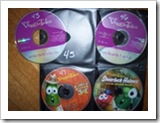
Other Locations might be for information only (unless you keep related papers in your Reference files), such as:
To create your custom Location labels or more Action or Reference labels, Paper Tiger makes it easy. In case you’re wondering, there is no limit to the number of locations you can have! Click here to see even more ways to use Paper Tiger to get organized.

Can you believe that stores are stocking the shelves already with back to school supplies? Yes, we are already seeing the local school supply lists displayed. Teachers will soon be preparing to open the doors to their classrooms and parents will be scrambling to purchase the school supplies needed for their children to get back to school.
We’re sure these teachers wish that preparation for the new school year was as simple as purchasing pens and pads, but unfortunately it is not. However, Paper Tiger Filing System Software for Document Management can make maintaining organization in the classroom a little easier for them.
Think about all the paper files that needs to be kept up with to be able to find when needed. Teacher are likely to teach many different types of students and subjects, and most of the time alphabetical order isn’t enough. Here are some of the things that Paper Tiger can help you with:
Of course, parents and students can easily get overwhelmed with the amount of papers, handouts, homework assignments, project instructions, etc. that is hard to maintain in an organized way if a filing system software is not implemented, not only for back to school but throughout the year.
With Paper Tiger’s flexibility, the files can be organized in a way that fits your personal workload. You would simply input the name of the items and keywords related to each file or set of the same file types in your Paper Tiger database. (Hanging File Folders = Items) When a file is needed, a simple search can locate any file in seconds.
You can use the aforementioned categories, such as attendance records and student assignments and the keywords would include the specifics such as the class, the grade, the year, the class period, etc. Replacing the endless paper piles on your desk, Paper Tiger not only reduces clutter but it saves time. You will no longer have to worry about losing an assignment to hand out, creating it again and making twenty-five copies only to spot the original on your desk.
Gone are the days of excessive sorting and taking stacks of miscellaneous paper home every night. With Paper Tiger, all of your paper files can be neatly organized in your file drawer(s) and you don’t have to worry about being able to find them later. This virtually eliminates losing paper files as well. This type of system will also benefit your substitute teacher. Life sometimes gets in the way and we have to miss work. If your substitute teacher can easily find your organized files, (s)he will be able to find what she needs with a simple search in your Paper Tiger database. Or you can search in your Paper Tiger database and let the substitute know where the file is. You can feel confident that your students won’t be disrupted in their lessons because you have implemented a system that keeps you, and your substitute teacher, organized. Your substitute teacher can feel better when coming to your class, because he(she) will not have to scramble around searching for what is needed for the day.
Have you ever had a star student that you make an example of in the next school year? You can set a location for “exemplary work” and also know where your past students’ best work is. The same type of thought process can apply to parent-teacher conferences and future lesson plans.
By implementing this system, teachers are not only becoming more organized and efficient, they are being responsible. Imagine if your students were going on a field trip and you can’t remember if Joseph brought back his permission slip or you’ve misplaced it. By organizing these types of documents, you will always have a preset place for them and be able to find them when you need them. You will always be able to retrieve the documents in a timely manner.
The same principle applies for parents and students. Decide what paper files need to be kept, then index the keepers into Paper Tiger’s database. When you need to retrieve an old project paper, you can search the database and you’ll know exactly which hanging file it was placed in. Also, each child could have one file for archives (reports, etc.) that should be kept and one file for stuff that can be tossed out when it’s no longer needed, to avoid having to sort through the files on a regular basis.
An example Location in Paper Tiger’s database for each child might be:
Location Name: Susie’s School Files
Item Name: English (with keywords for any projects and when they are due, along with keywords for other paper files that will be included in this hanging file folder and updated when papers are added)
Item Name: Math (with keywords for any projects and when they are due, along with keywords for other paper files that will be included in this hanging file folder and updated when papers are added)
Item Name: History (with keywords for any projects and when they are due, along with keywords for other paper files that will be included in this hanging file folder and updated when papers are added)
Item Name: Archives (with keywords for all paper files that will be included in this hanging file folder and updated when papers are added)
Item Name: To Be Tossed (set a date to toss these paper files, which could be at school end)
Paper Tiger is Not Just For Filing Paper! If you teach a younger group of kids that use a lot of educational toys, this indexing system will certainly keep them organized. You can use and label storage containers to store these larger items. Younger children have shorter attention spans and won’t be patient while you figure out if the flashcards and toy numbers are in the same place you had them last year. By numbering the storage containers to match the assigned indexed number in Paper Tiger, then input the contents into the keywords section, you’ll know exactly where the state puzzles are when you need them without searching through every container. And you’ll know the place to put the items back for the next time you need them.
Paper Tiger helps to eliminate clutter, so teachers, parents and students will be more organized, and each will have more time to spend with their families because they are not wasting time always looking for things.
This indexing system can benefit teachers of all grades, classrooms, and students. As you prepare to welcome your students in the next few weeks, think about using Paper Tiger Filing System to make school a much more rewarding experience for both you and your students when returning back to school.
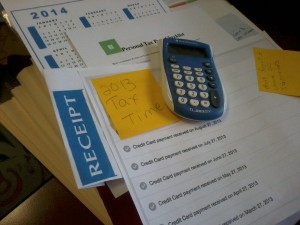
No matter when your tax deadlines are, it’s always good practice to have your records in order so that you won’t have to do last minute scrambling looking for the documents needed tax time preparation. Indexing your paper files in Paper Tiger Filing System Software for document management is ideal to ensure you are able to find your files when you need them.
It is estimated that people waste 150 hours per year searching for lost information. How much of your time is wasted strictly around tax time? Everyone needs a system of sorts to help them organize, and Paper Tiger is the perfect tool to use as a year-round filing system. Retrieving documents to prepare for filing your taxes does not have to be an ordeal.
Where should you start when organizing for preparing your taxes?
Click here to see a tax prep checklist from H&R Block, which would be a great place to start. You need to know what types of documents you will need whether you are preparing to file your taxes for yourself or if you will have a tax professional prepare them for you.
If you already have your files set up the way you want them and you have them indexed into your Paper Tiger database already, you can transfer those files out of the current Paper Tiger and physical location to an archived location. See Archiving Old Files section below.
If not, then you’ll need to decide what hanging file folders you need for each of these categories based on your situation so that you can proactively prepare for filing this year’s documents. While you’re going through documents for preparing your taxes, it is a good time to think about what file folders you’ll need for your current year. For each hanging file folder, create an item in your Paper Tiger database so that you can index the keywords that relate to the documents in the folder. When you need to retrieve a file, you simply search in Paper Tiger by the keyword and you’ll be able to find the file quickly.
To start with Paper Tiger Document Management Software, you would first set up all hanging file folders in your file cabinets coinciding with each ‘Location‘ in your Paper Tiger database at one time using the numbered tabs that you print out from the software and they never change. You type in information relating to each document in the item name and keyword section of Paper Tiger’s database digital file location. You can give the document any name you want without any worry about finding it later. This is because the system will allow you to tag keywords that describe all documents that you put into your hanging file folders. For documents that you want to add to the same file, simply edit the Item in the database and add additional keywords necessary for the new document(s). When your physical files have been indexed into the database, the easy-to-use search engine virtually eliminates lost information in your office, as well as eliminating filing the same subject matter under different names because you’ve forgotten what you filed it under previously.
Because the hanging file folders are already set up and waiting for your information, you also eliminate the time-consuming hassle of having to find and create a file folder tab each time you want to file something.
Whether filing away tax documents or other important files, be sure to file those documents immediately and in the correct location. Paper Tiger will keep them organized, but you have to take that first step towards getting your files in the right places. It’s especially important that you make sure your tax documents have a “home” and that you index them into your Paper Tiger database.
Here is an interesting fact that you should know: while most people assume that they can throw away or destroy their tax papers and other documents after a few years, that is not always true. In some cases, you might be legally required to hold onto all or some of these documents forever.
Because you are supposed to keep your personal past taxes on record for at least seven years, it can be easy to lose track of your archived files … which box in the garage or attic did you file previous year’s tax documents? For businesses, it is important to keep your records even longer. Isn’t it worthwhile to have them filed correctly for the time period you have to keep them? Using Paper Tiger filing system, this does not need to be a burdensome task.
How to archive old files is simple with Paper Tiger. Decide where your physical archived location should be. (wherever you keep the files that you don’t need in your main filing cabinet) Whether the best place is in boxes in the garage or a filing cabinet in the attic, simply create a location in Paper Tiger named “Archives”, and conduct a Transfer, Move function of the file or files being moved to the Archive Location within your database. Paper Tiger will assign a file number in your Archives file to move the file to in the physical location, where you will set up hanging file folders accordingly.
Alternately, if you need the same hanging file folders under the same name for the current year’s files, instead of a Transfer, Move function, you could conduct a Transfer, Duplicate to duplicate these files to Archives. Then you would simply change the date of the original files (both in the database and in the physical file location for the current year, as necessary) to be able to have a location for your current year’s files. The item name and keywords will most likely be the same in this case, but you can update your item and keywords in Paper Tiger, as necessary.
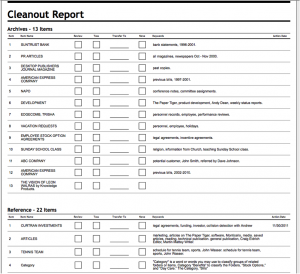
You will be rotating papers in and out of your system every single year. Taking the time to get organized now can save you years of grief as well as possible legal issues. Paper Tiger Document Management Software can help you get organized and stay organized. And don’t forget about Paper Tiger’s File Cleanout report that can be used to help you decide which items need to be moved, duplicated, or tossed/shredded.
During an audit, you might be asked to provide documentation that goes back many years. The IRS will not care that you don’t have your papers in a file nor will they give you benefit of the doubt if you say you cannot “find” something. That is not their problem, and they may penalize you further for everything that you do not produce when asked; making it absolutely vital that you keep the files and papers organized and easy to find.
We have several articles under the Retention Guidelines: How Long Should I Keep Records? category that you might find helpful.
If you have papers you need to keep for taxes, but also need them in other files, it can be confusing when you need to retrieve them for tax time. For instance, you need to keep track of a medical bill you are paying off in “Bills” file, but also need it for your “Taxes” file to find at the end of the year. With a traditional filing system, you would have to choose which file to put it in knowing it will be hard to find it later because you may not remember which file you put it in.
In Paper Tiger, the Item Name would be “Bills to Pay”and you might have several bills in that folder. You would simply edit that item, then type the keywords “hospital bill” and “medical” in the item’s keyword section when adding the medical bill to the Bills to Pay file. Then just like when you use any other search engine, you would search for any one of those keywords when you need to retrieve the documents, and Paper Tiger does the work. The results will come back letting you know which file it is in so you can retrieve it. All you have to do is make sure you type in as many possible keywords you can think of when filing the documents, and you will never have a problem again tracking down a document for any purpose.
Never scramble for documents around tax season again. Use Paper Tiger Filing System Software for Document Management all year to organize all important documents so that tax time won’t be quite so dreaded.

This Paper Tiger webinar hosted by Meggin McIntosh, “The Ph.D. of Productivity”™ and Paper Tiger Expert, will help you better understand Paper Tiger Filing System Software for document management to be able to use the software more effectively and see how you can get organized in every area of your life — not just paper filing! Meggin does an awesome job in showing you pictures of all of the different things she has organized and relating those items back to what she has indexed in Paper Tiger.

About Meggin McIntosh
Meggin McIntosh, Ph.D., “The Ph.D. of Productivity”(tm). Through her company, Emphasis on Excellence, Inc., Meggin McIntosh supports smart people who want to be more productive so that they can consistently keep their emphasis on excellence.
Emphasis on Excellence, Inc.
Email: meggin@meggin.com
Phone: 775.853.5510
MEGGIN’S WEBSITES
http://meggin.com (Primary site)
http://GetaPlanGuides.com
http://KeepingChaosatBay.com
http://TopTenProductivityTips.com
http://JustWhelmed.com
http://OwningWordsforLiteracy.com
http://PumpernickelPublishing.com
http://StayingPositiveinaFreakedOutWorld.com
http://LifeofEs.com

Managing paper and getting organized in any office is an overwhelming task, because there is a seemingly ever-increasing mountain of paper files.
Whether you’re an individual, a small or large company, you must practice good time management and office organization techniques in order to control costs and provide excellent service. Experts agree that efficient staff productivity is a must, and Paper Tiger Filing System Software for document management is a simple and effective tool that can help you in getting organized and save time. You get all the power of the computer WITHOUT the risks and time commitment of paper scanning.
How much does it cost you, not only monetarily, but in stress and lost time when you have to search for something you need, and it takes a while to find it or recreate it? Is your current filing system working for you? Are you able to retrieve what you need, when you need it?
Experts tell us that the average person wastes 150 hours per year just looking for things, and we’ve found some estimates even higher. You can calculate the cost of disorganization in your office at http://thepapertiger.com/roicalculator and you’ll see in a matter of seconds, that your return on investment using Paper Tiger will quickly allow you to get organized and be more productive. Imagine the satisfaction and reduced stress of being able to put your fingers on what you need, when you need it! And Paper Tiger is not just for filing paper … you can index into the software’s database any physical item that you can put a number onto.
Getting organized and more productive will give you more time to do the things you enjoy! An organized and productive system will help you manage your time more wisely.
Paper Tiger allows you to go ahead and set up hanging files with numbered tabs, so they are ready to drop your paper files into. Paper Tiger greatly simplifies filing by eliminating the problems found in traditional alphabetic methods and has made finding paper files in the office faster and much more reliable.
Stacks of paper files all over the office lead to frustration and inefficiency, which is costly in both time and money, so you must prioritize and decide on procedures to handle the paper that comes through your office. To create an even more efficient office, be sure to document your policy for paper handling and retention guidelines. This will ensure that everyone is organized in the same way and training on these procedures will be a cinch in the event of employee illness or staff turnover.
When going through mail and any other documents that cross your desk, decide what needs action, what should be filed, and what should be tossed. Today’s mail is tomorrow’s clutter. Stop making stacks; start making decisions!
-Decide what is junk, and toss or shred what should be tossed immediately.
-For items that need to be filed, the best practice would be to open your Paper Tiger database and type in Item Name and Keywords for each item as necessary, then immediately drop into the corresponding hanging folder. You don’t have to worry about remembering what name you filed it under later because you can input as many keywords as you like for any given file. If you already have a file indexed for a specific subject, just edit the Item in Paper Tiger to add any necessary keywords and add it to that existing hanging file folder.
Alternately, you could have a tray or folder on your desk where you can immediately place items to be filed. Then set aside 15 minutes to clear your desk at the end of each day, enter the necessary information regarding the ‘to be filed’ into your Paper Tiger database, and place the files into the corresponding hanging folder. (remember, the hanging folders are already set up, so you don’t have to worry about finding folders and making tabs)
-Prioritize action items. Decide if the action can be done immediately. If not, either delegate or check the deadline. Decide how long it will take you to complete the task, and go ahead and schedule the time on your calendar for the length of time needed to get the job done by the deadline. Input the Item Name and Keywords information regarding the action file into Paper Tiger, and select the Action date to start. Place the item in the corresponding Action Item hanging folder. This gives you a place to put all files relating to the same project without stacking up on your desk until you’re ready to work on it.
Paper Tiger is great for short-term action files, as well as long-term storage of files. Of course, purging of files should be a task that is done regularly according to your office retention guidelines and compliance with regulations to ensure your filing cabinets do not overflow with unnecessary or outdated files. If you don’t have a records retention policy, (how long certain types of files should be kept), now is a good time to make those decisions. You’ll not only save time by having to think about this every year, but you will set you and your staff up for better efficiency, as well as keeping your office space clutter-free and efficient.
When you’re ready to purge files to archives or to recycle/shred, simply conduct a Transfer of the file(s) in your Paper Tiger database, print a Transfer report if needed, and then remove the physical files from your filing cabinet or desk drawer. (If transferring to archives, don’t forget to set the action date in Paper Tiger when a file should be removed from archives to recycle/shred. That way, you’re sure to keep up with the life-cycle of your document management system, and you don’t keep files too long.) Then box the files you’ve removed, label the box with the corresponding item number in Paper Tiger’s database as well as the date the contents should be recycled/shredded, and send to the archive location. You’ll want to box files to be recycled/shredded at the same time in one or more boxes.
For example, you may have financial files and legal files that need to be kept for 7 years, but you need to clear last year’s files to make room for the current year in your immediate file area. For all files that need to be purged in 7 years, place them in the same box or multiple boxes if there are that many, and label the box Archive 1 (or whatever the archive item number is in Paper Tiger), then write “Purge and shred December 31, 2020″ on the box or label. Your archive boxes can be placed in order of archive item number so that you’ll know where they are and which boxes should be purged on what date. If you’ve set the action date in Paper Tiger when a file should be removed from archives to recycle/shred, when you open Paper Tiger, a reminder flag will let you know which files or boxes need action next.
Making decisions regarding how paper should flow through your office and the life-cycle of document management and retention will go a long way in your staff time management, increased productivity and organization. As mentioned previously, when you document your paper handling system and retention guidelines (the schedule in the life cycle of documents in your office), you will reduce cost and legal liabilities. Keeping unnecessary files will result in over-stuffed filing cabinets or storage space. In addition, different types of files need to be kept or destroyed based on legal reasons and time-lines, which could result in civil or criminal issues.
See our Blog Category for Records Retention: How long should you keep records? for articles written from different sources, including the IRS, to help you decide document/records retention schedule for your specific needs.
Following are 3 simple steps that will help you get organized, but remember, these steps do not have to be done in one day. Take it a step at a time, and before you know it, you’ll be more organized and productive.

Filing systems and document retention is a living, breathing, evolving science. Each year brings changes and new challenges in the needs for document filing and retention requirements and guidelines.
Governments, organizations and businesses struggle to keep up with the ever changing flow of paperwork. Paperless systems are implemented and on average fail, because systems are not followed by everyone. Some people just have to print! Fear of loss and over taxed workloads hinder progress as the paperless war wages with the influx of scanner systems. The looming questions of what to retain and for how long, continue to consume untold resources for both paper and digital files.
With the onset of electronic communication, even more retention guideline planning is becoming necessary. Everything must be backed up from fragile devices to even more fragile devices and possibly backed up to a cloud-based back up system. Record retention guidelines need to be determined for electronic or digital files, as well as paper files.
First you have to decide what paper files to keep and how long to keep them. Begin by determining the purpose for retaining each document type. From the IRS website: How Long to Keep Records. The IRS (or your specific country government tax related organization) has updated information regarding how to keep records and how long to keep them for tax purposes. You can use this information as a guideline when planning your policy for document retention and how long to keep records, however you should always consult your accountant before getting rid of any financial records and consult your attorney before getting rid of any legal records for advice on the length of time specific documents are legally required to retain.
After the legally required time has been determined to keep each type of document, guidelines need to be documented so that everyone can follow the policy that has been set. You won’t have to guess every year what can be tossed or what has to be kept. It is important that everyone strictly follow the company guidelines, which should be determined by the legal requirements as stated above, because it can be just as legally damaging if a document is kept past the required time period.

With a simplified filing system such as Paper Tiger in place, this becomes an easy task. Paper Tiger Filing System Software for Document Management can help you get your records in order and then be able to find them when you need them! You can use the Action Date function to remind you when you need to take action on records, including when you need to move them out of the current year’s hanging file folders to an archived location, and then when you can purge them out of your files altogether. You can also note in Paper Tiger’s database how long you need to keep each file even if it is indefinite. Paper Tiger also has a report entitled File Cleanout Report that is helpful when moving documents from file cabinets to an archived location. Decision should be made when files are archived as to if and when they should be destroyed. Archived boxes should be marked as to when they should be destroyed.
According to N&K, CPAs, “The answer varies depending on firm policies and the type of files. Generally, the files should be kept as long as they serve a useful purpose or until all legal and regulatory requirements are met. Businesses often base how long they keep files on the length of the statute of limitations for breach of contract, breach of fiduciary duty, and professional liability claims. The statutes, of course vary with each state.”
And here is another example of a record retention guide published by the Massachusetts Society of CPAs: http://www.cpa.net/resources/retengde.pdf
Even more information at http://en.wikipedia.org/wiki/Document_retention
Litigation
With lawsuits and public scrutiny becoming increasingly popular, the need to substantiate actions with physical proof has grown dramatically. Notes and emails, which were once discarded, are now needed to prove the validity of corporate and government decisions. Subordinates should consider retaining any correspondence from superiors that may point to the rationale behind their decisions.
Client Records
Many businesses base their customer retention on superior customer service. This includes maintaining easy access to copies of client records. Clients, just like the businesses that serve them, have the same problems as large corporations with document retention, and often find it simpler to request another copy of documentation from its source than to keep it on file, or to locate that file. Determining which documents are most often requested, as well as their age, will simplify the process of creating client record retention guidelines.
Financial Documentation
Financial documentation is retained for a multitude of reasons, taxes, efficiency, profitability, growth, tracking, accounting, etc., guidelines as to their storage location must be determined. Financial documentation must often be reassigned a new location with the passing of time. While this may seem futile, an indexing system such as Paper Tiger filing system software makes the process simple.
Accountability
Almost all documentation falls under the category of proving accountability. Once the purpose of accountability for each document has been determined, it will be easier to decide on its association and to create a retention guideline. The value of accountability proof of many documents is not worth their retention; however, they may have many other uses.
Once the retention purpose for each document type has been established, its retention life and location can be determined. While document retention and creation of guidelines may seem overwhelming and even futile, an innovative indexing system such as Paper Tiger, allows companies to maintain their hard copy files and achieve near paperless efficiency, while providing the ability to adapt with the ever-evolving science of document retention.
It isn’t necessary to discard old files to implement an updated filing system, however with the motivation to get organized after determining a document retention guideline specifically related to how you work, you might find yourself clearing some clutter from your file cabinets. By implementing the perfect indexing tool of Paper Tiger filing system software, a higher level of filing efficiency and document retention can be achieved, and you’ll also be able to find what you need, when you need it!
This article by Meggin McIntosh, “The Ph.D. of Productivity”™ and a Paper Tiger Expert, will help you think through steps to purge your filing cabinets and get your filing system under control! Meggin also recommends Paper Tiger. Click here to check out Meggin’s webinar that will help you better understand Paper Tiger Filing System Software for document management to be able to use the software more effectively and see how you can get organized in every area of your life — not just paper filing! Meggin does an awesome job in showing you pictures of all of the different things she has organized and relating those items back to what she has indexed in Paper Tiger.

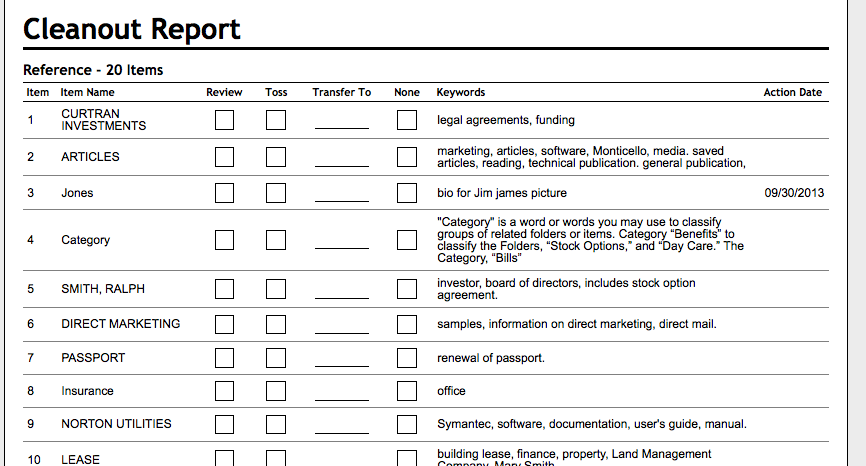
Are your filing cabinets overly full? Below are some tips that Meggin sent to a consulting client who had incredibly (overly) full filing cabinets. Don’t forget to update your Paper Tiger database to update the items indexed to match what is in your filing cabinets, and you might think about using the File Cleanout Report to help you. (see example of File Cleanout Report below)
1. Choose one drawer to start with and just start with the very first file in that drawer. Do not start working on another drawer until you have gone through all of the first place you started.
2. Set aside a certain amount of time everyday, for example, 30 minutes of uninterrupted time, and go through as many files as you can in that time.
3. Just take the one file out of the drawer, put it on your desk, and do the following:
4. If you come to any files that are falling apart, have one of your assistants put things into a new file. It’s frustrating to pull files out that are just falling apart or frayed.
5. Just keep working through one file at a time…and my guess is that you will toss, shred, or archive half of what is currently in your office.
Remember….everyday, go through folders until you are down to the bare bones of what you need to keep in your filing cabinets.
And for more strategies and tips like these, you will want the Top Ten Productivity Tips – the Collection! which is available for immediate download!
Published with Permission (c) 2013 Meggin McIntosh, Ph.D. | The Ph.D. of Productivity(tm) | http://www.meggin.com
About Meggin McIntosh
Meggin McIntosh, Ph.D., “The Ph.D. of Productivity”(tm). Through her company, Emphasis on Excellence, Inc., Meggin McIntosh supports smart people who want to be more productive so that they can consistently keep their emphasis on excellence.
Phone: 775.853.5510
And to keep moving forward on your goals for more peaceful productivity, join others (worldwide) who receive Meggin’s weekly emails, and see what is available for download at no cost at any of MEGGIN’S WEBSITES:
http://meggin.com (Primary site)
http://GetaPlanGuides.com
http://KeepingChaosatBay.com
http://TopTenProductivityTips.com
http://JustWhelmed.com
http://OwningWordsforLiteracy.com
http://PumpernickelPublishing.com
http://StayingPositiveinaFreakedOutWorld.com
http://LifeofEs.com
Teachers are preparing to open the doors to their classrooms and parents are scrambling to purchase last minute school supplies. We’re sure these teachers wish that preparation for the new school year was as simple as purchasing pens and pads, but unfortunately it is not. However, Paper Tiger Filing System Software for Document Management can make maintaining organization in the classroom a little easier for them.
Think about all the paper files that you have to keep track of and be able to find when needed. As a teacher, you are likely to teach many different students and subjects, and most of the time alphabetical order isn’t enough. Here are some of the things that Paper Tiger can help you with:
Of course, parents and students can easily get overwhelmed with the amount of papers, handouts, homework assignments, project instructions, etc. that is hard to maintain in an organized way if a filing system software is not implemented.
With Paper Tiger’s flexibility, the files can be organized in a way that fits your personal workload. You would simply input the name of the items and keywords related to each file in your Paper Tiger database. (Hanging File Folders = Items) When a file is needed, a simple search can locate any file in seconds.
You can use the aforementioned categories such as attendance records and student assignments and the keywords would include the specifics such as the class, the grade, the year, the class period etc. Replacing the endless paper piles on your desk, Paper Tiger not only reduces clutter but it saves time. You will no longer have to worry about losing an assignment to hand out, creating it again and making twenty-five copies only to spot the original on your desk.
Gone are the days of excessive sorting and taking stacks of miscellaneous paper home every night. With Paper Tiger, all of your paper files can be neatly organized in your file drawer(s) and you don’t have to worry about being able to find them later. This eradicates losing paper files as well. This type of system will also benefit your substitute teacher. Life sometimes gets in the way and we have to miss work. If your substitute teacher can easily find your organized files, (s)he will be able to find what she needs with a simple search in your Paper Tiger database. You can feel confident that your students won’t be disrupted in their lessons because you have implemented a system that keeps you, and your substitute teacher, organized.
Have you ever had a star student that you make an example of in the next school year? You can set a location for “exemplary work” and also know where your past students’ best work is. The same type of thought process can apply to parent teacher conferences and future lesson plans.
By implementing this system, teachers are not only becoming more organized and efficient, they are being responsible. Imagine if your students were going on a field trip and you can’t remember if Joseph brought back his permission slip or you’ve misplaced it. By organizing these types of documents, you will always be able to find them when you need them. You will always be able to retrieve the documents in a timely manner.
The same principle applies for parents and students. Decide what paper files need to be kept, then index the keepers into Paper Tiger’s database. When you need to retrieve an old project paper, you can search the database and you’ll know exactly which hanging file it was placed in. Also, each child could have one file for archives (reports, etc.) that should be kept and one file for stuff that can be tossed out when it’s no longer needed, to avoid having to sort through the files on a regular basis.
An example Location in Paper Tiger’s database for each child might be:
Location Name: Susie’s School Files
Item Name: English (with keywords for any projects and when they are due, along with keywords for other paper files that will be included in this hanging file folder and updated when papers are added)
Item Name: Math (with keywords for any projects and when they are due, along with keywords for other paper files that will be included in this hanging file folder and updated when papers are added)
Item Name: History (with keywords for any projects and when they are due, along with keywords for other paper files that will be included in this hanging file folder and updated when papers are added)
Item Name: Archives (with keywords for all paper files that will be included in this hanging file folder and updated when papers are added)
Item Name: To Be Tossed (set a date to toss these paper files, which could be at school end)
Paper Tiger is Not Just For Filing Paper! If you teach a younger group of kids that use a lot of educational toys, this indexing system will certainly keep them organized. You can use and label storage containers to store these larger items. Younger children have shorter attention spans and won’t be patient while you figure out if the flashcards and toy numbers are in the same place you had them last year. By numbering the storage containers to match the assigned indexed number in Paper Tiger, then input the contents into the keywords section, you’ll know exactly where the state puzzles are when you need them without searching through every container.
Paper Tiger helps to eliminate clutter, so teachers, parents and students will be more organized, and each will have more time to spend with their families because they are not wasting time always looking for things.
This indexing system can benefit teachers of all grades, classrooms, and students. As you prepare to welcome your students in the next few weeks, think about using Paper Tiger Filing System to make school a much more rewarding experience for both you and your students.
Life can be very stressful. Now add your clutter and disorganization to the equation and it’s even worse. Paper Tiger Filing System Software for Document Management can significantly reduce stress and anxiety levels by helping you get organized and virtually eliminating paper clutter. We’ve compiled a list of tasks that when combined with Paper Tiger are essential towards a less stressful life.
Before any organization can occur, you have to part with paper that you don’t necessarily need. Why are you holding on to last week’s grocery list? Do you really need that pile of junk mail? Surely, if you took the time to look at all the paper clutter that you’ve accumulated, you would throw a majority of it in the trash. Getting rid of the excess clutter is the first step towards reducing stress. A huge weight will be lifted as you throw away extra paper files that you don’t need.
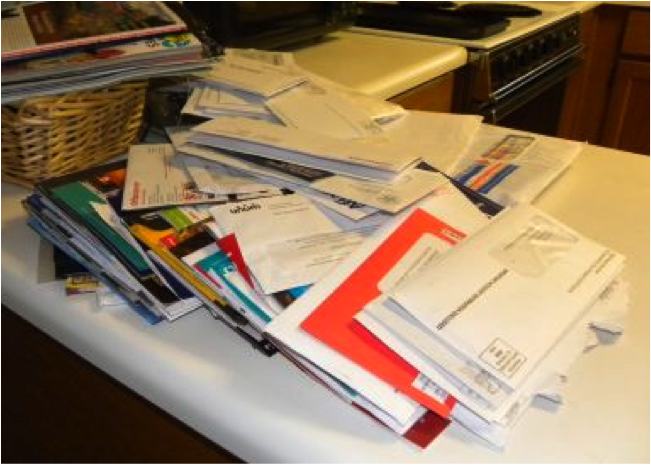
Instead of creating a to-do later pile or getting in the habit of doing things later, get things out of the way. Don’t check the mail and toss it on the kitchen counter, sort through it while it’s on your mind so you don’t have the chance of building clutter piles. By making yourself do this and not procrastinating, you will greatly reduce stress.
In addition to being proactive, be tidy. When you are finished looking at a bill or a magazine, put it back where it belongs. Giving your paper items a home is yet another way to avoid clutter piles. By setting these boundaries and forcing yourself to make decisions in a timely manner, you are stopping clutter before it can accumulate.
For those paper files that you need to keep in hard copy format, you would simply index the item name and keywords relating to those documents into Paper Tiger’s database.
One hindrance to filing is finding a hanging file folder and the tab insert where you would put the name of the file. Then what to name the file is another problem. Files can be named different things, so what do you name each type of file so that you can remember when you need to retrieve the file to reference it again.
Paper Tiger solves these problems because the software allows you to set up all hanging file folders in your file cabinets at one time using the numbered tabs that you print out from the software and they never change. They stay in numbered order for that location in your database. You type in keywords relating to each document in Paper Tiger’s database digital file location matching the physical file location.
Paper Tiger assigns the file number to the document or set of relating documents that you want to put in the same hanging file folder. You can give the document any name you want without any worry about finding it later. For documents that you want to add to an existing file, simply edit the Item and add additional keywords necessary for the new document(s), then drop into that relating hanging file folder. You don’t have to add keywords for every piece of paper in a file if the file name contains the only word(s) you would ever look up to find it. (ex: invoices)
Because the hanging file folders are already setup and waiting for your information, you eliminate the time-consuming hassle of having to find and create a file folder and insert tab each time you want to file something. Again, the software will assign an index number to each file you add to be put in the first available empty hanging folder.
After you’ve converted your filing system to Paper Tiger, you can file your paper files away, and no longer have to worry whether you will be able to find it again. When you need to find a file later, you simply conduct a Google-like search in the database for whatever keyword you’re thinking on that day to find where your file is located.
Paper Tiger is not just for filing paper. You can add other Locations in your database to organize other types of things. Some of these are described on our Not Just For Filing Paper page, which include but are certainly not limited to the following:
As you can see, you can get organized with Paper Tiger and reduce the stress of searching for the things you need, but also to clear away clutter.

Are you having a hard time parting with your clutter? Do you get an overwhelming feeling of dread when you think about starting to organize? If you feel like you are indecisive or simply just a hoarder, these questions will be helpful during organizing. Because Paper Tiger Filing System Software for Document Management is not just for filing paper, using the software will also help you stay clutter free. You can ask yourself the following questions before you file with Paper Tiger.
Use these questions to help you figure out what you should keep or toss. Afterwards, use Paper Tiger Filing System Software for Document Management to further organize by indexing the items so you can find what you need when you need it.
Working from home spares you a few daily frustrations, such as rush-hour traffic and inconsiderate coworkers. But, it’s still work, and it still comes with its own set of challenges. Let’s take a look at the latest technology that can help you thrive while working from home:
Working long hours helps you build your empire, but they’re also rough on your body. Extended sitting has been linked to an increased risk for cardiovascular disease and cancer, according to the Mayo Clinic, and looking at a computer all day puts you at risk for developing ”computer vision syndrome,” WebMD reports.
Try some body-friendly technology to help avert these conditions. A treadmill desk gets you up and moving while you work, and Gunnar computer glasses are designed specifically to reduce eye fatigue and minimize eye damage.
Working from home demands having some source of payment. While PayPal and other online services might suffice, having the capability to accept credit card payments on the spot gives you more power over your business. This is where the Square gadget and service comes in.
Link your Square account to your bank account, plug the Square gadget into any iPhone or Android mobile device, run a credit card and the money is uploaded to your bank account in about two business days. Since cards can be keyed in, even online businesses that don’t see physical credit cards can use the service.
If the equipment you need for your livelihood is on site, it’s time for a household security upgrade. Automatic outdoor lighting, security cameras and an alarm system with a security service are vital to protecting your investment. You can explore the different security services available to you at www.SecurityCompanies.com.
While you hopefully have property insurance for your home or office, make sure it covers all those cool gadgets you’re adding to your business arsenal. Expensive equipment, like video cameras and instruments, often require insurance riders to be fully covered.
If you seem to get your best ideas while you’re making lunch or halfway out of your clothes and into the shower, a USB voice recorder saves you that frantic trip back to your desk. The compact device requires no additional connectors. Just plug into a USB port and pull your digital files onto your computer.
For those who prefer the old-school style of jotting ideas down as they flow, Ideapaint is wall paint with low VOC content, meaning you won’t be breathing in excess chemicals as you roll the paint onto the wall to create your own full-wall dry-erase board.
Stop messing with mountains of paperwork and ineffective filing systems. Paper Tiger Filing System Software for Document Management helps you organize your entire office. Use it to index your hard-copy paper files by entering the relevant keywords into your Paper Tiger database. No more time wasted or hair-pulling while you try to remember where you placed what—you’ll be able to easily find the documents you need with one quick search.
The best way to declutter your home and your home office is to use Paper Tiger, which is not just for paper filing and document management because anything that you can put a number onto, you can index into Paper Tiger to help you get organized and to help your business thrive!
About the Author:
Brian Kane Brian is a computer science geek who loves to write about new programs.
If you have a filing system in place and are filing your paper documents, but you still feel unorganized, you may be making one of six crucial filing mistakes that deter you from maximum organization. With Paper Tiger Filing System Software for Document Management, you can get the ball rolling quickly by indexing and filing the physical documents. Read on to find out what not to do when organizing your filing system.
By avoiding these filing mistakes, your organizing system paired with Paper Tiger Filing System Software for Document Management will keep your files organized and help you find exactly what you need faster.

With people working from home and diving into self-employment, home offices are quite common. It has been said that at least one in four households have a home office. When is the last time you organized your entire home office (besides when you initially moved in)? If you can’t answer this question, it’s time. With clutter on the kitchen counter, dining room table and other areas of the house, this article in particular is designated to getting the home office organized.
Sometimes this isn’t a task that can be tackled in one day, but with Paper Tiger Filing System Software for document management, these tips can help you make huge strides.
Since you are cleaning out your office, you might as well make sure that you are not storing documents that you no longer need or use. Your organizing system needs to be organized as well, and once you have your Paper Tiger database set up with your paper files indexed, you can print the File Clean-Out report to help you clean out papers from existing files. Also use the Transfer Report to help you physically move documents from one location to another so the documents in your hanging file folders match what you have in Paper Tiger.
These are steps to help you get started. Of course, depending on how cluttered your home office is, it might be quite difficult to clean out your entire home office in one day. Completing one of these steps a day, (in order of course), can ensure a clean and tidy office in less time than you think. Remember to relax and take your time when cleaning your office. Don’t get overwhelmed in organizing your home office. You’ll feel so accomplished and proud, you will want to go from room to room, and maybe even tackle organizing the garage. Happy Organizing!